Shiko-dachi
Name: Shiko-dachi (四股立ち)
English: Sumo stance
Introduction
Shiko-dachi is a wide, low, and symmetrical stance in which the feet are turned outward, the knees open in the same direction, and the body lowers between the legs.
In Masutatsu Oyama’s works, this stance is presented as sumo stance. The name describes its character well: a stable, low, and strongly rooted form with clear load in the legs and hips.
Within the basic system of Kyokushin, Shiko-dachi is primarily used to develop a low center of gravity, lateral stability, hip control, and the ability to keep the body upright within a wide base.
Definition
Shiko-dachi is a wide, symmetrical stance in which the feet are placed approximately twice shoulder width apart, the toes are turned outward, and the body is lowered by bending the knees and opening them in the same direction as the feet.
The stance is characterized by:
- a wide lateral base
- outward-turned feet
- bent and open knees
- lowered hips
- a straight spine
- balanced load between the right and left leg
- a low and centered center of gravity
Its function is to create a strong, low, and symmetrical working stance for basic training, kata, and techniques that require stability rather than fast movement.
Technical figure
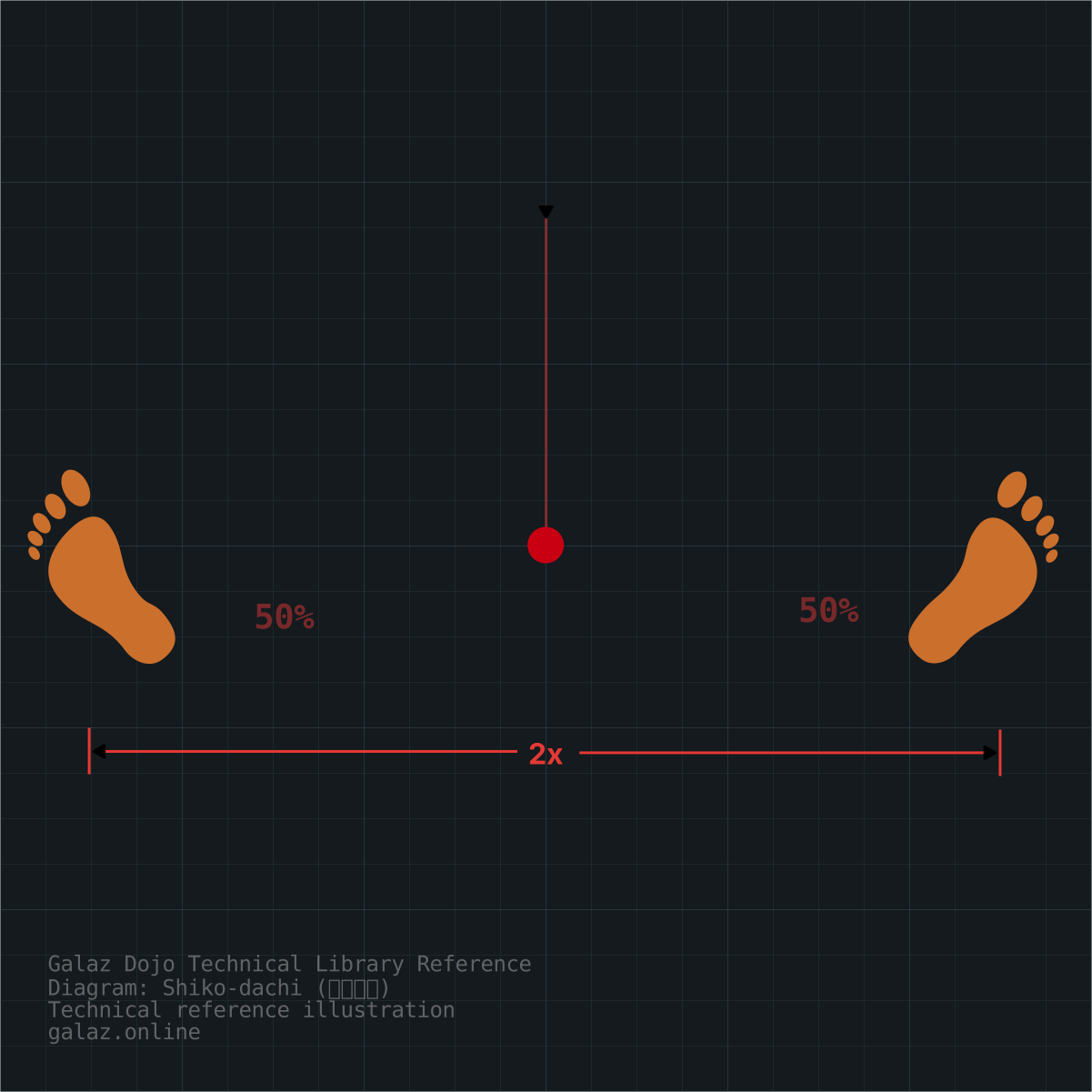
The figure shows Shiko-dachi from above as a technical reference diagram. It illustrates the wide lateral placement of the feet, the even load between right and left, and the central direction of the stance.
The 2× marking relates to Oyama’s description of the stance as approximately twice shoulder width. It should be understood as a proportional guideline, not as an exact measurement identical for every body.
The 50/50 marking is used in this documentation as a pedagogical description of the balanced weight distribution in the stance. Oyama does not state a specific percentage for Shiko-dachi in the consulted descriptions, but the symmetrical form of the stance means that the weight is carried evenly between both legs.
Structure and form
Feet
The feet are placed widely to the sides, approximately twice shoulder width apart. Both feet are turned outward so that the knees and hips can open without the body falling forward or backward.
The soles of the feet should maintain stable contact with the floor. The weight should not rest only on the inside edge, outside edge, heel, or ball of the foot. The foot angle should be clear but controlled.
Legs
The knees are bent and opened in the same direction as the toes. The legs carry the body symmetrically and actively.
The knees must not collapse inward. If the knees do not follow the line of the feet, the structure of the stance breaks and the load shifts incorrectly. The stance should feel strong in the legs, but not locked.
Hips
The hips lower between the legs. The pelvis is kept gathered and neutral, without being pushed too far backward or tilted too far forward.
In Shiko-dachi, the hips are an essential part of the structure. The body should not simply sink downward; it must be actively supported by the legs and hips.
Torso and spine
The spine is kept straight and the torso vertical. The neck follows the natural line of the spine and the head is held upright.
Even though the stance is low, the torso should not lean forward over the knees. A straight torso allows the center of gravity to stay centered and enables force to transfer through the body without the form collapsing.
Shoulders, arms, and hands
The position of the arms depends on the context. In pure stance training, the arms may be held naturally at the sides or according to the form indicated by the instructor.
In kihon, idō geiko, and kata, the arm position is determined by the technique being performed. The quality of the stance should not depend on where the arms are placed.
Gaze
The gaze is held forward in the direction in which the body is working. The head should remain upright and should not be pulled downward by the low stance.
Weight distribution
In this documentation, the weight distribution is described pedagogically as:
- 50 % on the right leg
- 50 % on the left leg
This describes the symmetrical load of Shiko-dachi. The stance has no intended forward or backward weight bias; instead, the body is carried centered between both legs.
The percentage should be understood as a pedagogical indication, not as a direct measurement from Oyama.
Center of gravity and balance
The center of gravity is kept low and centered between the feet. The stance should feel heavy toward the floor, but still active.
Balance in Shiko-dachi is based on lowering the body without allowing the torso to fall forward, keeping the knees aligned with the feet, and supporting the hips between the legs. When the form is correct, it creates strong lateral stability and good control of the body’s vertical line.
The stance should not feel passively sunken. It should be low, stable, and ready to support the next technique.
Technical purpose
Shiko-dachi is trained to develop a wide, low, and symmetrical structure.
The stance particularly develops:
- leg strength
- hip control
- knee alignment in relation to the foot line
- a low center of gravity
- lateral stability
- an upright torso under load
- the ability to support techniques from a low base
Shiko-dachi is therefore both a formal stance and a physical training stance. It clearly shows whether the practitioner is truly carrying the body actively or merely imitating the external shape.
Use
Basic training
In basic training, Shiko-dachi is used to build stability, leg strength, and body control. It makes it easy for the instructor to see whether the knees, feet, hips, and torso are working within the same structure.
The stance is especially useful for training low body carriage without losing posture.
Kihon / Idō geiko
In kihon and idō geiko, Shiko-dachi is used when the technique requires a wide and stable base. It is suitable for moments where the practitioner must show clear rooting, control, and power from a low position.
It is not, however, a stance for fast and free movement. The wide base provides stability but limits rapid transitions, especially in fast kicking techniques.
Kata
In kata, Shiko-dachi is used to give the form weight, stability, and clear direction. The stance should not only be low, but also structured: feet, knees, hips, torso, and gaze must be held together within the same technical expression.
Kumite / application
In kumite, Shiko-dachi is not a primary mobile fighting stance. It can, however, be understood as a temporary stable position in application, for example when the body needs to lower, root, or finish a technique with power.
In practical use, the stance should therefore not be made static. It is most relevant as a moment of stabilization, force transfer, or finishing, not as a long-term fighting base.
Technical key points
- Place the feet widely to the sides.
- Turn the toes outward.
- Bend the knees and let them follow the line of the toes.
- Lower the hips between the legs.
- Keep the weight balanced between right and left.
- Keep the spine straight and the torso vertical.
- Let the hips and legs support the stance.
- Keep the shoulders and neck relaxed.
- Avoid making the stance wider or lower than you can correctly support.
Common mistakes
Common mistakes in Shiko-dachi are:
- placing the feet too narrowly, causing the stance to lose its clear lateral base
- placing the feet too widely, causing the body to sink without control
- turning the toes outward too little, causing the stance to lose its open structure
- turning the toes outward too much, making it difficult for the knees to remain stable
- allowing the knees to collapse inward instead of following the foot line
- allowing the hips to collapse downward instead of lowering them actively
- leaning the torso forward
- pushing the pelvis too far backward
- rounding the back
- placing more weight on one leg than the other
- tensing the shoulders and neck instead of letting the legs and hips carry the work
- making the stance low at the expense of technical form
Comment
Shiko-dachi is one of Kyokushin’s clearest stances for training low, wide, and symmetrical body structure.
Its value lies in developing the ability to lower the center of gravity without losing structure. When performed correctly, it combines leg strength, hip control, upright posture, and stable balance in a powerful basic form.