Sanchin-dachi
Name: Sanchin-dachi (三戦立ち)
English: Sanchin stance
Introduction
Sanchin-dachi is a short, compact and centred stance in which one foot is placed slightly in front of the other and the toes of both feet point slightly inward.
In the basic system of Kyokushin, Sanchin-dachi is an important training stance for posture, balance, concentration of power and fundamental technique. It is used to teach the body to remain stable without the base becoming long, wide or dispersed.
Definition
Sanchin-dachi is a compact stance in which:
- one foot is placed slightly in front of the other
- the rear foot stands slightly back and to the side
- the toes of both feet point slightly inward
- the knees, hips and trunk remain active and gathered
- the body is kept upright
- the weight is distributed evenly between both legs
The stance exists in right and left variations. The form is the same, but mirrored, depending on which foot is forward.
Sanchin-dachi should be understood as a training stance for stability, body control and power transmission from the centre. It is neither a long forward-driving stance nor a rear-weighted stance.
Technical figure
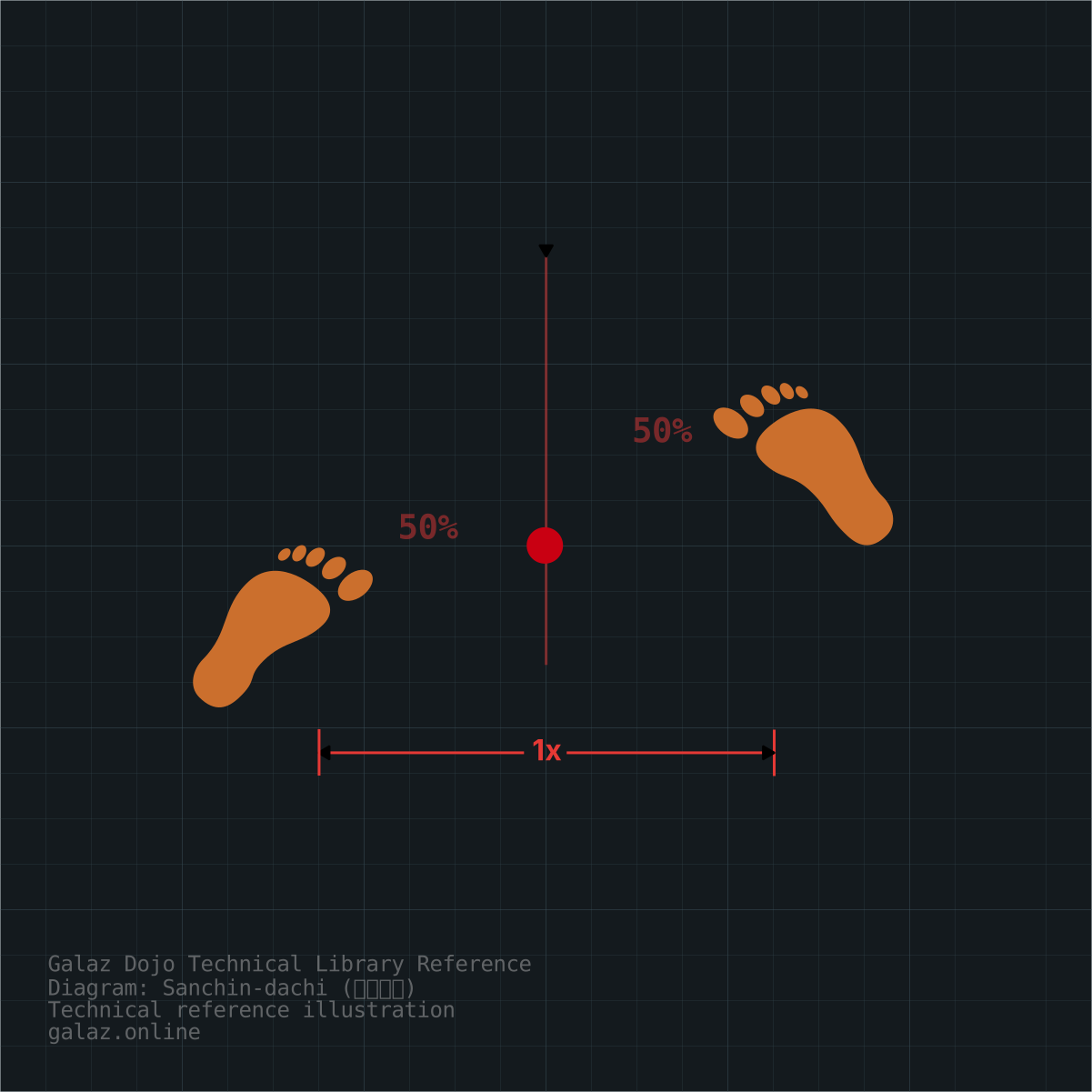
The figure shows Sanchin-dachi from above as a technical reference diagram. It presents a short, diagonal foot placement, even weight distribution and a centred body line.
The markings 50/50 and 1× should be understood as pedagogical markings in this documentation. They indicate even weight distribution and a relative proportion in the diagram, not exact numerical measurements from Oyama.
Structure and form
Feet
One foot is placed slightly in front of the other. The heel of the front foot is approximately in line with the toe line of the rear foot, and both feet are turned slightly inward.
The feet should create a short and stable base. The distance should be sufficient for the body to carry weight and power, but not so long that the stance loses its compact Sanchin character.
The inward direction of the toes should be clear but moderate. If the feet are turned too far inward, the knee line is disrupted and the stance becomes artificial. If the toes do not point inward at all, one of the stance’s main structural characteristics is lost.
Legs
Both legs are slightly bent and work actively. The knees follow the direction of the feet and remain stable over the base.
The work of the legs should feel gathered toward the centre. The stance should be firm, but not locked. The knees should neither collapse inward nor be forced rigidly outward.
Hips
The hips are kept stable and centred over the base. The pelvis remains neutral so that the body does not tilt forward, lean backward or rotate out of the stance.
Sanchin-dachi requires active coordination between the legs, hips, abdomen and back. Power should not remain only in the legs, but should be gathered through the body’s centre and transmitted into the technique.
Trunk and spine
The trunk is kept upright, compact and controlled. The spine remains long without the chest being lifted excessively.
The neck follows the line of the spine. The body should feel connected from the feet through the legs, hips and trunk. Tension should be organised and functional, not hard, stiff or raised into the shoulders.
Shoulders, arms and hands
The position of the arms depends on the context.
In pure stance training, the arms may be held neutrally. In kihon and kata, Sanchin-dachi is often used together with techniques in which the arms work close to the body’s centre.
When the arms are used in Sanchin-dachi, the elbows should remain controlled and the shoulders relaxed. The hands should not move so far away from the body that the shoulders rise or the centre is lost.
Gaze
The head is kept still and the gaze is directed forward. The gaze should be focused without creating tension in the neck or shoulders.
Weight distribution
In this documentation, the weight distribution is described pedagogically as 50/50 between the front and rear foot.
This expresses the principle that Sanchin-dachi is carried evenly on both legs. The percentage is a modern pedagogical formulation of even weight distribution, not an exact numerical quotation.
The weight should not fall clearly forward or backward. Both feet should actively support the stance, and both legs should be ready to support technique, breathing and the next movement.
Centre of gravity and balance
The centre of gravity is kept low, gathered and centrally placed within the short base of the stance.
Balance in Sanchin-dachi is based on the body not resting passively on the feet. The feet, legs, hips and trunk should together create a structure that is stable but alive.
The stance develops the ability to:
- maintain balance in a short and compact base
- gather power close to the body’s centre
- keep the body upright during technical work
- unite posture, breathing and technique
- prepare the next movement without losing structure
Technical purpose
Sanchin-dachi is trained to gather the body into a strong, centred and controlled form.
The technical purpose of the stance is to develop:
- a stable basic structure
- even weight bearing
- active leg work
- control of the hips, abdomen and back
- concentration of power in the centre
- posture under technical pressure
- coordination between stance, breathing and technique
In Kyokushin basic training, Sanchin-dachi is one of the clearest stances for teaching the body to carry power without the form becoming large, loose or excessively long.
Use
Basic training
In basic training, Sanchin-dachi is used to build the body’s technical centre. The student trains to stand short, stable and gathered, with even weight and active connection between the feet, legs, hips and trunk.
The stance is especially important for understanding how power is created through posture, abdominal work, back control and correct body alignment.
Kihon / Idō geiko
In kihon, Sanchin-dachi is used for punches, blocks and other basic techniques in which the body must work from the centre.
During movement, the stance should retain its compact form. The step should not become long or sliding in a way that causes weight distribution, foot angle or body line to be lost.
Kata
Sanchin-dachi is central in Sanchin no Kata and also appears in other kata where Kyokushin emphasises strong posture, ibuki, slow control and gathered technique.
In kata, it becomes clear that Sanchin-dachi is not merely a foot position. It functions as a whole-body form in which stance, breathing, tension and technique work together.
Kumite / application
In free kumite, Sanchin-dachi is rarely used in its full form for an extended period. However, the stance trains principles that are important in close and compact positions: centre control, balance, short power transmission and the ability to maintain structure under pressure.
Technical key points
- Place one foot slightly in front of the other.
- Let the heel of the front foot sit approximately in line with the toe line of the rear foot.
- Point the toes of both feet slightly inward.
- Keep the stance short, compact and gathered.
- Carry the weight evenly on both legs.
- Keep the knees slightly bent and aligned with the feet.
- Gather the hips, abdomen and back toward the centre.
- Keep the spine upright and the neck natural.
- Keep the shoulders relaxed.
- Direct the gaze forward.
Common mistakes
Common mistakes in Sanchin-dachi are:
- allowing the stance to become too long
- placing the feet too wide apart
- placing the front foot too far ahead of the rear foot
- turning the toes too far inward
- not turning the toes inward at all
- letting the weight fall clearly forward or backward
- allowing the knees to collapse inward
- locking the legs instead of keeping them active
- rotating the hips or losing the centre
- lifting the chest excessively
- making the back stiff
- raising the shoulders
- making the tension crude and locked instead of gathered
- letting the gaze drop
- moving the head unnecessarily
Comment
Sanchin-dachi is one of Kyokushin’s most important basic stances because it trains the body to gather power, balance and posture in a compact form.
For this reason, the stance should not be reduced to foot placement. It is a technical form for centre, control and fundamental body strength in Oyama’s karate.