Kiba-dachi
Name: Kiba-dachi (騎馬立ち)
English: Horse stance / straddle stance
Introduction
Kiba-dachi is a wide, symmetrical, and low basic stance in which the feet are kept parallel, the toes point forward, and the body is lowered between the legs.
In Masutatsu Oyama’s works, this stance is presented as straddle stance or horse stance. It belongs to the central basic stances of Kyokushin and is used to develop leg strength, lateral stability, hip control, and the ability to support technique from a low, centered base.
The character of the stance lies in the combination of width, parallel feet, balanced weight, and upright body posture.
Definition
Kiba-dachi is a wide and symmetrical stance in which the body is lowered as if sitting in a riding position.
The stance is characterized by:
- placing the feet wide apart to the sides
- keeping the feet parallel
- pointing the toes straight forward
- bending the knees and keeping them open
- lowering the hips between the legs
- keeping the upper body upright
- carrying the weight evenly between both legs
Its function is to create a strong, low, and stable base for basic training, kihon, idō geiko, and kata.
Technical figure
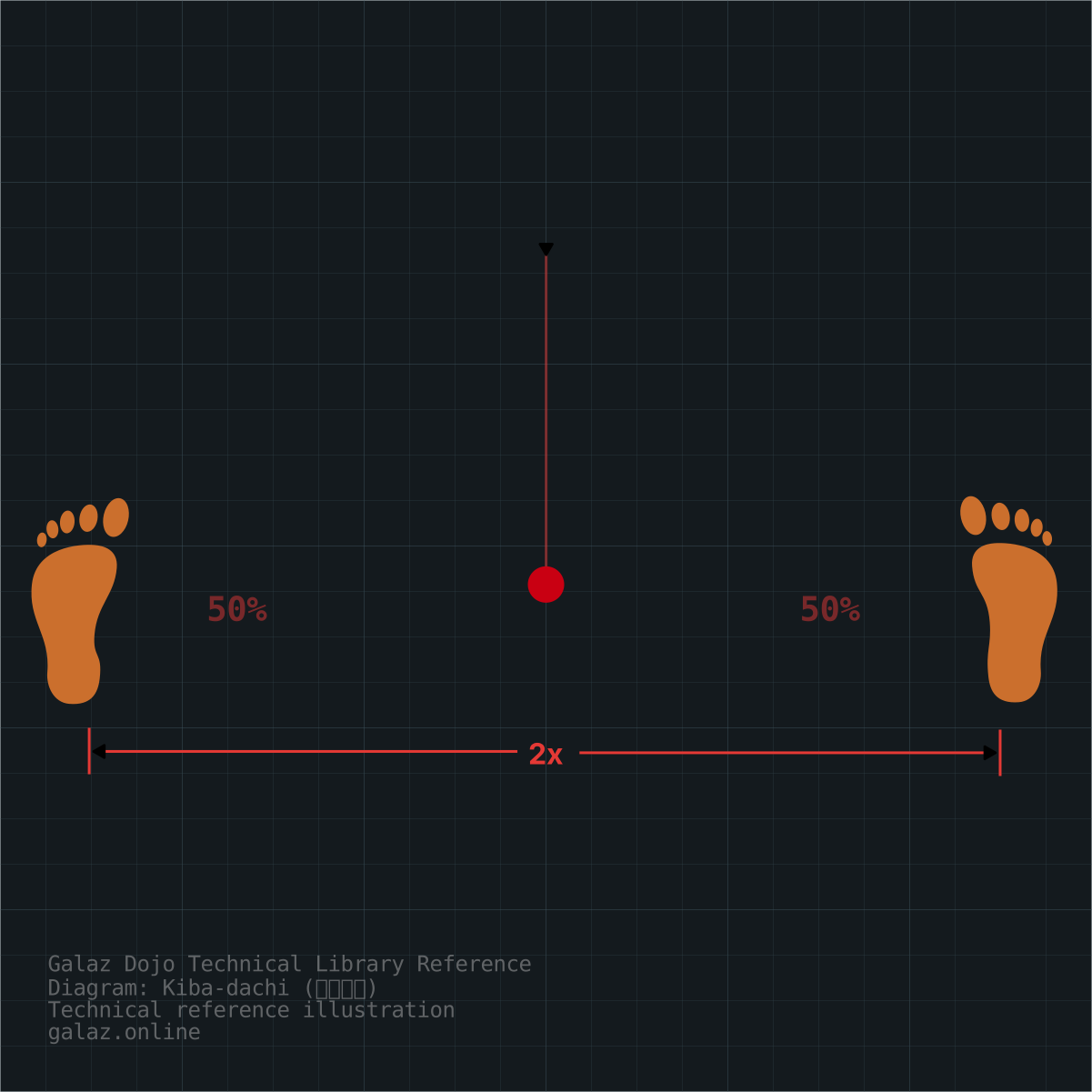
The figure shows Kiba-dachi from above as a technical reference diagram. It shows the parallel placement of the feet, the wide lateral base, the centered center of gravity, and the even weight distribution.
The markings 2x and 50/50 should be understood as pedagogical references in this documentation. 2x indicates the approximate lateral width, often described in technical Kyokushin teaching as around two shoulder widths. 50/50 indicates that the weight is carried evenly between the right and left leg. These markings are guides for technical understanding and should not be treated as absolute anatomical measurements.
Structure and form
Feet
The feet are placed wide apart to the sides and kept parallel. The toes point straight forward, not outward.
The whole sole of each foot remains in contact with the floor. The pressure should feel stable through the foot, with an active sense of keeping the feet anchored to the ground. In technical instruction, the cue is sometimes used to draw the heels slightly inward toward the center without actually moving the feet. The purpose is to create tension and unity in the base.
In this documentation, the width is given pedagogically as approximately two shoulder widths. The exact width must be adapted to body height, hip structure, and leg mobility, but the stance should be neither so narrow that it loses lateral stability nor so wide that the knees, hips, and back lose their proper structure.
Legs
The knees are bent and kept open in the same direction as the feet. They must not collapse inward.
The work of the legs should feel active. The stance is not a passive sitting position, but a controlled lowering in which the thighs, knees, and hips support the body together. The knee line should be organized so that the legs can carry pressure without the foot arches, knees, or hips collapsing.
Hips
The hips are lowered between the legs and kept stable. The pelvis remains neutral, without being pushed excessively forward, tilted backward, or allowed to drop to one side.
The hips should be unified and active, but not stiff. They should give the stance weight, power transfer, and control without blocking the body’s ability to move into the next action.
Torso and spine
The spine is kept straight and the upper body upright. The neck follows the line of the spine and the head is held naturally.
The body should not lean forward over the knees and should not fall backward. The vertical line passes through the center of the body down toward the centered base between the feet.
Shoulders, arms, and hands
The position of the arms and hands depends on the context.
When Kiba-dachi is trained as a pure stance, the arms may be held naturally or according to the dojo’s basic position. In kihon, idō geiko, and kata, the position of the arms is determined by the technique being performed, such as strikes, blocks, or elbow techniques.
The shoulders are kept low and relaxed. The work of the stance should be carried by the legs, hips, and torso, not by tension in the shoulders and neck.
Gaze
The gaze is kept forward in the direction in which the body is working. The head is held upright and steady, without pushing the chin forward or pulling it excessively back.
Weight distribution
Kiba-dachi is carried with even weight distribution between the right and left leg.
In this documentation, the weight distribution is given pedagogically as:
- 50% on the right leg
- 50% on the left leg
This expresses the symmetrical character of the stance. The percentage should be understood as a technical guideline for even support, not as an exact biomechanical measurement.
Center of gravity and balance
The center of gravity is kept lowered and centered between the legs. The stance should feel heavy downward, but not locked.
Balance in Kiba-dachi is based on the body sinking vertically between the feet while the spine remains upright. When the stance is correctly organized, the base feels wide and stable laterally, while the body remains ready to transfer power, rotate the hips, or move into the next action.
Kiba-dachi therefore trains not only leg strength, but also the ability to keep the center under control while the body works low.
Technical purpose
Kiba-dachi is trained to develop a strong, low, and symmetrical working stance.
The technical purpose of the stance is to:
- build strength and endurance in the legs and hips
- develop lateral stability
- train even support between the right and left side
- keep the spine upright under load
- create a stable base for techniques to the side or from a centered position
- develop knee control and hip control
- strengthen the body’s ability to support technique without losing form
Use
Basic training
In basic training, Kiba-dachi is used to build low body support, leg strength, and control of the knees, hips, and spine. It is especially useful because errors in balance, knee line, or upper body position become visible quickly.
Kihon / Idō geiko
In kihon, Kiba-dachi is used as a base for techniques that require clear lateral stability and centered power. The stance can support strikes, blocks, and elbow techniques when the body needs to be low, stable, and evenly anchored.
In idō geiko, the practitioner also trains the ability to enter, leave, and turn in Kiba-dachi without breaking the height, center, or foot line of the stance.
Kata
In kata, Kiba-dachi is used as a marked, low, and symmetrical form. It clearly shows the body’s ability to support technique from a wide base and to keep the center stable even when direction, hip action, and arm technique change.
Kumite / application
Kiba-dachi is not primarily a free kumite stance. Its value in application lies mainly in the principles it develops: low center of gravity, lateral stability, hip control, and the ability to carry power through a stable base.
Technical key points
- keep the feet wide apart to the sides
- keep the feet parallel
- point the toes straight forward
- bend the knees without letting them collapse inward
- lower the hips between the legs
- carry the weight evenly between both legs
- keep the spine straight and the upper body upright
- keep the shoulders and neck relaxed
- make the stance active, not passively sunken
- keep the center between both feet
Common errors
Common errors in Kiba-dachi include:
- turning the feet outward so that the stance shifts toward Shiko-dachi
- turning the feet inward and breaking the parallel structure
- allowing the knees to collapse inward
- making the base too narrow and losing lateral stability
- making the base too wide and making the stance heavy or difficult to support
- allowing the hips to sink passively instead of supporting them actively
- rounding the back or leaning the upper body forward
- placing more weight on one side
- tensing the shoulders and neck
- dropping the gaze toward the floor
Comment
Kiba-dachi is a central stance for developing low stability, leg strength, and symmetrical body support in Kyokushin. Its simple form makes it demanding: parallel feet, open knees, lowered hips, and a straight back must all be maintained at the same time. When trained correctly, it becomes a clear foundation for power, control, and technical discipline.