08 Zenkutsu-dachi
Name: Zenkutsu-dachi (前屈立ち)
English: Forward stance / forward-leaning stance
Introduction
Zenkutsu-dachi is a forward-oriented basic stance in which the front leg is bent, the rear leg is kept extended, and the body is organized to support techniques that drive forward.
In the basic system of Kyokushin, this stance is central to kihon, idō geiko, and kata. It develops the ability to carry technique in a clear direction without losing posture, balance, or connection to the floor.
Definition
Zenkutsu-dachi is an asymmetrical stance in which one foot is placed in front of the other, the front knee is bent, and the rear leg is kept straight or clearly extended.
The stance is characterized by:
- the front foot points forward
- the rear foot turns slightly outward
- the front leg carries most of the forward-oriented load
- the rear leg stabilizes and supports forward drive
- the body remains directed forward without collapsing at the waist
- the stance is used for techniques that require direction, stability, and forward power
Technical figure
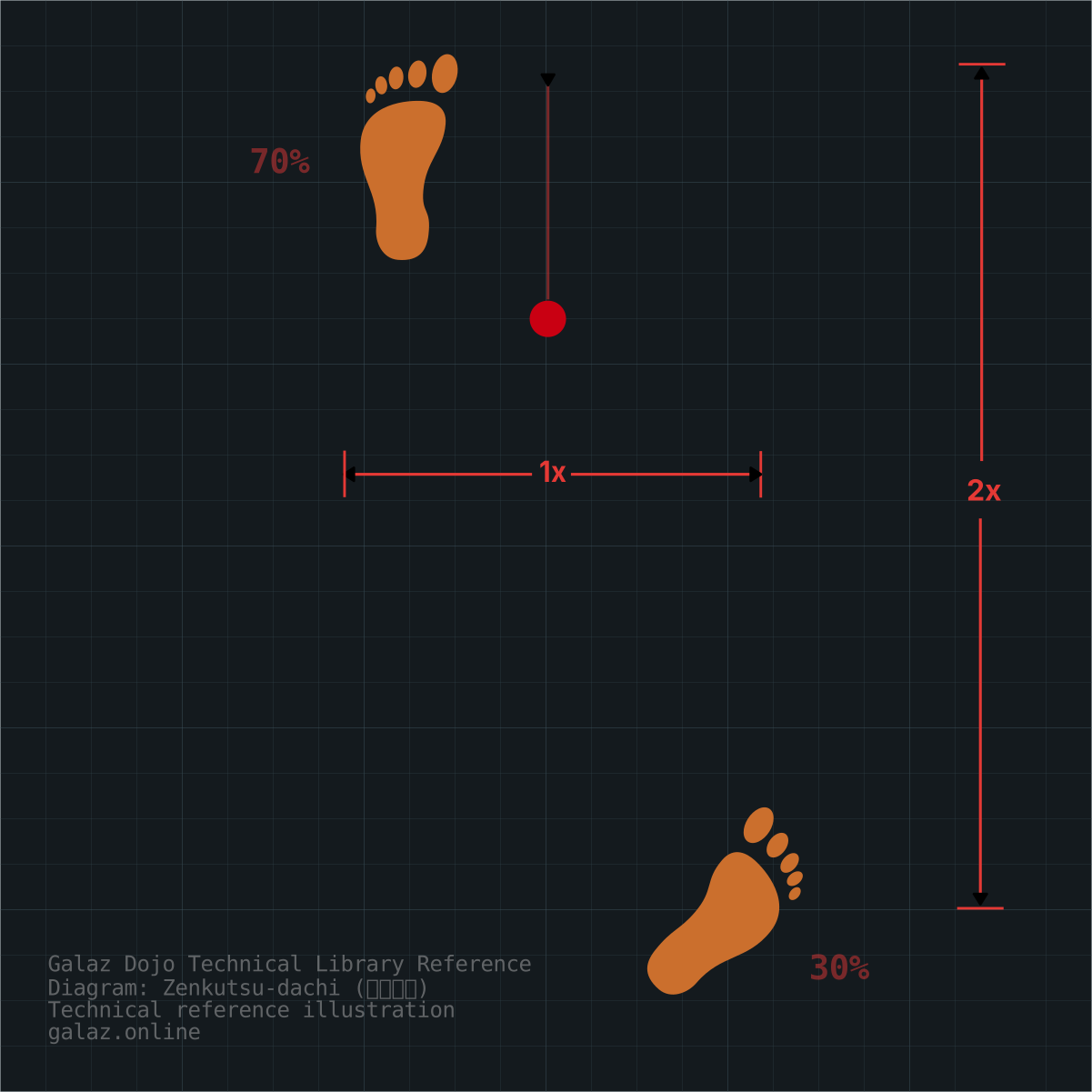
The figure shows Zenkutsu-dachi from above as a technical reference diagram.
The markings in the diagram should be understood as pedagogical aids for training and instruction. The width is shown as approximately 1×, the length as approximately 2×, and the weight distribution as 70% forward / 30% rear. These measurements are used here as pedagogical guidelines within the Galaz Dojo Technical Library, not as exact measurements given by Oyama.
The important point is that the figure shows the main principle of the stance: a longer forward-oriented base, a clearly loaded front leg, an active rear leg, and a center of gravity carried forward without the body losing its structure.
Structure and form
Feet
The front foot is placed clearly in front of the rear foot and points straight ahead in the direction of the technique. The rear foot remains in contact with the floor and turns slightly outward.
The base should be long enough to create a clear forward direction, but not so long that the hips lock or the rear leg loses functional contact with the floor. The lateral width should provide stability without making the stance too wide. In this documentation, approximately one shoulder-width is used as a pedagogical guideline.
Legs
The front knee is bent and directed along the same general line as the front foot. The knee should not collapse inward or move so far forward that foot contact and hip control are lost.
The rear leg is kept straight or strongly extended. It should not become passive. The rear leg provides support, grounding, and drive through the stance.
Hips
The hips are lowered and kept organized between the feet. They should support the forward direction without turning away from the technique.
The pelvis remains neutral and stable. The stance should not be built by dropping the upper body forward, but by creating an integrated structure through the hips, legs, and feet.
Torso and spine
The torso is kept strong and gathered. The spine should be organized, the neck natural, and the head stable.
The upper body may have a slight forward quality, but it should not break at the waist. The forward feeling should come from the whole stance, not from allowing the chest or head to fall forward.
Shoulders, arms, and hands
The shoulders remain relaxed and gathered. The position of the arms and hands is determined by the technique being performed.
In kihon and idō geiko, zenkutsu-dachi often appears together with techniques such as gedan barai, oi-tsuki, jōdan uke, chūdan soto uke, and chūdan uchi uke. When the stance is trained separately, the arms should be held neutrally or according to the instruction of the specific exercise.
Gaze
The gaze is directed forward in the direction of the technique. The head is held naturally and steadily so that posture, balance, and technical direction are not broken.
Weight distribution
Zenkutsu-dachi is a forward-weighted stance.
In this documentation, the weight distribution is given pedagogically as approximately 70% on the front leg and 30% on the rear leg. This should be understood as an instructional aid, not as an exact percentage given by Oyama.
The front leg has the main responsibility for anchoring the stance forward. However, the rear leg must not become empty or passive. It should continue to provide stability, pressure against the floor, and the ability to move the body into the next action.
Center of gravity and balance
The center of gravity is kept low, active, and directed forward.
The stance should feel stable in the forward direction, but not heavy or locked. The practitioner should be able to execute a technique, take the next step, turn, or return without first having to recover balance.
Balance in zenkutsu-dachi is built through the relationship between:
- the bent front leg
- the extended rear leg
- the position of the hips
- the contact of the feet with the floor
- the gathered posture of the torso
When these elements work together, the stance can carry force forward without the practitioner falling, overextending, or losing control of the next movement.
Technical purpose
Zenkutsu-dachi is trained to develop forward structure, stability, and transfer of power.
The stance teaches the practitioner to:
- carry body weight in a forward direction
- connect foot placement, hips, and technique
- create stability during steps and movement
- keep the rear leg active even when the weight is forward
- use a lowered center of gravity without becoming stiff
- execute blocks, thrusts, and other techniques with clear direction
In Kyokushin basic training, zenkutsu-dachi therefore functions as a primary stance for understanding how the body is organized when technique is driven forward.
Use
Basic training
In basic training, zenkutsu-dachi is used to establish a clear relationship between foot, knee, hip, torso, and technique.
It develops in particular:
- a stable forward-oriented base
- a bent front knee
- an active rear leg
- a controlled hip position
- balance during stepping
- transfer of power from the floor into the technique
Kihon / Idō geiko
In kihon and idō geiko, zenkutsu-dachi is often used when techniques are performed step by step, moving forward or backward. The stance provides a clear form for training direction, timing, and coordination between movement and technique.
Common techniques in zenkutsu-dachi include:
- gedan barai
- oi-tsuki
- jōdan uke
- chūdan soto uke
- chūdan uchi uke
Kata
Zenkutsu-dachi appears frequently in Kyokushin basic kata. It is used to carry blocks, thrusts, and changes of direction with clear form.
In kata, the stance is not only a physical position, but also a way of showing direction, balance, center of gravity, and technical intention.
Kumite / application
In kumite, zenkutsu-dachi is rarely as long or formally marked as it is in kihon or kata. The principle, however, remains present when the body drives forward in attack, blocking, or counterattack.
In application, the stance can therefore be understood as a basic principle of forward body structure rather than as a fixed fighting position.
Technical key points
- Place one foot clearly in front of the other.
- Point the front foot straight forward.
- Turn the rear foot slightly outward.
- Bend the front knee without allowing it to collapse inward.
- Keep the rear leg straight or strongly extended.
- Lower the hips without locking the pelvis.
- Carry the center of gravity forward while maintaining control.
- Keep the spine organized and the torso gathered.
- Keep the rear leg active, not empty.
- Direct the gaze forward in the direction of the technique.
Common mistakes
Common mistakes in Zenkutsu-dachi are:
- the stance becomes too short and loses its forward function
- the stance becomes too long and locks the hips, knees, and balance
- the front knee is not bent enough and the stance becomes too high
- the front knee collapses inward instead of following the direction of the foot
- the rear leg bends too much and the stance loses drive
- the rear foot turns too far outward and breaks the line of the hips
- the weight settles between the legs instead of being carried forward
- the upper body falls forward from the waist
- the shoulders become tense and the posture becomes rigid
- the gaze drops or turns away from the direction of the technique
Comment
Zenkutsu-dachi is one of the most important basic stances in Kyokushin because it teaches the practitioner to carry technique forward with stability, direction, and control.
The stance connects footwork, hips, center of gravity, and technique in a clear form. When trained correctly, it is not merely a position, but a fundamental way of understanding forward-directed power in Kyokushin.