Sotohachiji-dachi
Name: Sotohachiji-dachi (外八字立ち)
English: Outer figure-eight stance / outward eight stance
Introduction
Sotohachiji-dachi is an open and symmetrical basic stance in which both feet are placed apart and the toes point outward.
The name refers to the fact that the feet, viewed from above, form an outward figure-eight shape. In the Kyokushin stance system, Sotohachiji-dachi functions mainly as a technical reference for outward foot placement, even weight distribution, and upright body structure.
It should not be understood as a low working stance. It is practised primarily to clarify foot angle, knee alignment, and symmetrical balance within an open base.
Definition
Sotohachiji-dachi is a neutral, open basic stance in which:
- the feet are placed apart in a symmetrical base
- the toes point outward
- the heels are closer together than the line of the toes
- the body is held upright
- the weight is carried evenly on both legs
- the stance creates stability without lowering the body into a deep position
The stance should be clear, relaxed, and orderly. It should not be made so wide or so low that it loses its character as a neutral basic form.
Technical figure
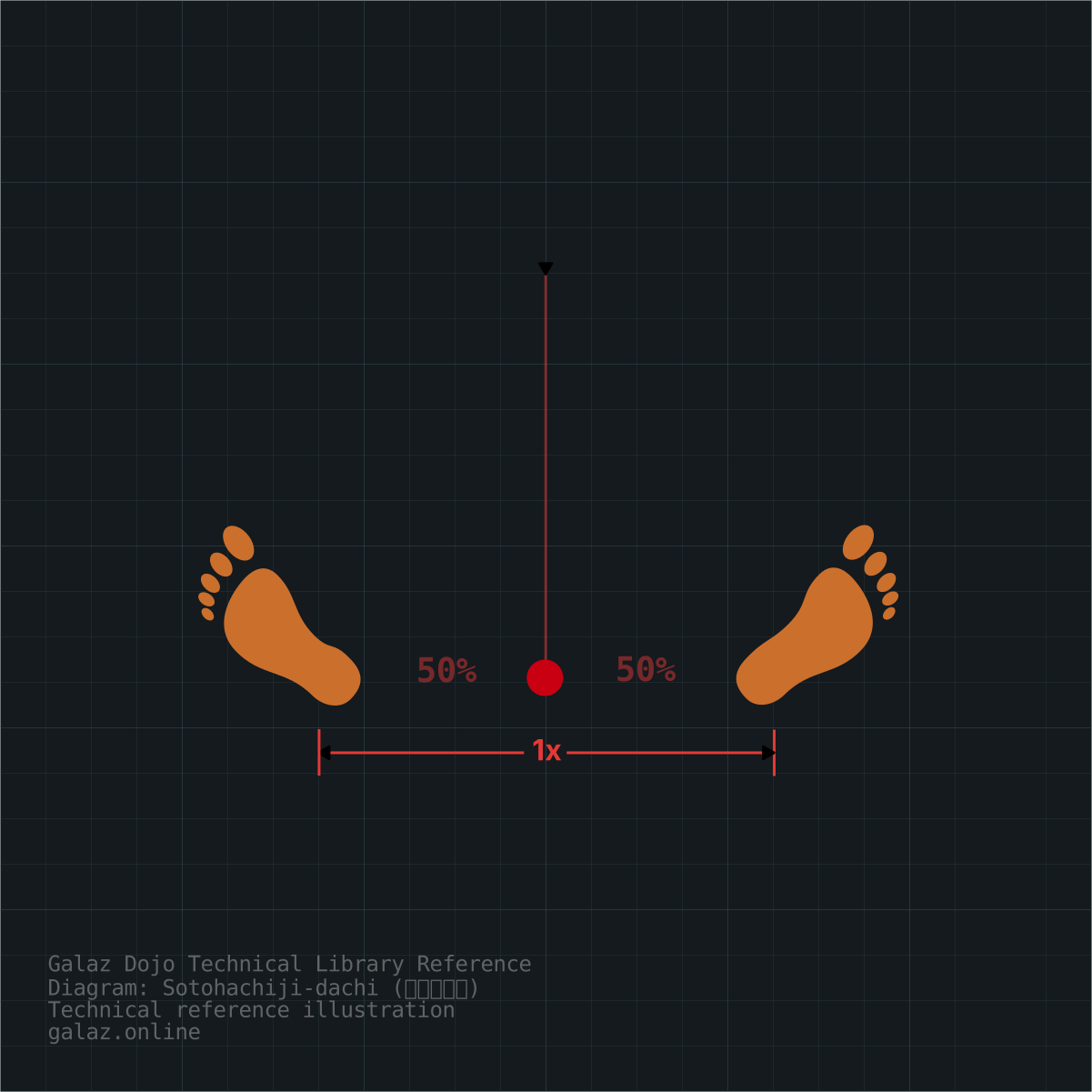
The figure shows Sotohachiji-dachi from above as a technical reference diagram. It shows the outward foot shape, the symmetrical base, and the even weight distribution.
Any measurements, angles, or percentages shown in the figure should be understood as pedagogical markings for Galaz Dojo Technical Library. They should not be read as exact measurements from Masutatsu Oyama unless otherwise stated in the text.
Structure and form
Feet
The feet are placed apart, with the toes directed outward.
The heels are closer together than the line of the toes, creating the outer figure-eight shape. Both feet should maintain clear contact with the floor and support the body evenly.
The width should be natural and stable. It should be sufficient to make the foot shape clear, but not so wide that the stance begins to resemble a low working stance.
Legs
The legs are kept straight or slightly and naturally bent.
The knees follow the line of the feet and should not collapse inward. Since the feet are turned outward, the knee line must be organized so that the legs, hips, and feet work in the same direction.
The legs should support the body symmetrically, without locking the knees and without excessive muscular tension.
Hips
The hips are kept neutrally positioned over the base.
The pelvis should not tilt forward or backward. The hips should remain centered between the feet and support the upright posture without the body twisting, sinking, or being pressed downward.
Torso and spine
The torso is kept upright and collected.
The spine maintains a natural vertical line, the neck is long, and the upper body does not lean forward, backward, or sideways. The stance trains the ability to change the angle of the feet without losing the body’s vertical structure.
Shoulders, arms, and hands
The shoulders are kept relaxed.
The position of the arms is not a fixed part of the stance itself. In basic form, the arms may rest naturally at the sides. In kata, kihon, or yoi position, the placement of the arms may vary depending on the context.
Gaze
The head is held upright and the gaze is directed forward.
The gaze should support the body’s centering and should not create twisting in the neck, shoulders, or torso.
Weight distribution
Sotohachiji-dachi is carried with even weight distribution.
In this documentation, the weight distribution is indicated pedagogically as:
- 50 % on the right leg
- 50 % on the left leg
The stance has no intended forward or backward weight bias. The weight should feel centered between the feet and distributed evenly through both legs.
Center of gravity and balance
The center of gravity is kept midway between the feet.
The balance should feel laterally stable, but not heavy or locked. The stance should create a clear sense of center, where foot angle, knee line, hips, and spine work together.
Sotohachiji-dachi should therefore feel:
- centered
- symmetrical
- upright
- relaxed
- ready for the next transition
The balance is not based on lowering the body deeply, but on placing the weight correctly over an open and even base.
Technical purpose
Sotohachiji-dachi is practised to develop control over open foot placement and symmetrical body structure.
The technical purpose of the stance is to:
- clarify the outward angle of the feet
- train knee alignment over the feet
- develop even weight distribution
- strengthen the understanding of neutral balance
- maintain upright posture in an open base
- prepare the student for stances in which foot angle, hip placement, and knee line must work together
The stance is primarily structural and pedagogical. It helps the student understand how a simple change in foot angle affects the organization of the whole body.
Use
Basic training
In basic training, Sotohachiji-dachi is used to isolate and clarify the outward foot shape.
The student trains to stand in an open base without sinking too low, tightening the upper body, or allowing the weight to shift onto one leg.
Kihon / Idō geiko
Sotohachiji-dachi is normally not a main working stance for techniques in kihon or idō geiko.
It is, however, useful as a reference when the student needs to understand the transition from parallel foot placement to outward foot placement. It also helps distinguish a neutral open base from deeper and more technically loaded stances.
Kata
In kata understanding, Sotohachiji-dachi can be used as part of the formal logic of stances.
It is especially relevant when stances are arranged in sequence and the student needs to understand the difference between parallel, inward-facing, and outward-facing foot positions.
Kumite / application
Sotohachiji-dachi is normally not used as an active kumite stance.
Its value in application lies mainly in body understanding: centered weight, an open foot line, lateral stability, and the ability to organize the knees, hips, and torso over a symmetrical base.
Technical key points
- place the feet apart in a symmetrical base
- direct the toes outward
- keep the heels closer together than the line of the toes
- keep the weight evenly distributed
- let the knees follow the line of the feet
- keep the hips neutral
- keep the spine upright
- avoid making the stance low, wide, or heavy
- keep the shoulders and arms relaxed
- direct the gaze forward
Common mistakes
Common mistakes in Sotohachiji-dachi are:
- opening the toes so much that the stance becomes exaggerated
- opening the toes too little, making the outward foot shape unclear
- placing the feet too wide apart
- making the stance too low
- allowing the knees to collapse inward even though the feet point outward
- shifting more weight onto one leg
- leaning the body forward, backward, or sideways
- tilting the pelvis instead of keeping it neutral
- tensing the shoulders and arms
- treating the stance as an active fighting stance instead of a neutral basic form
Comment
Sotohachiji-dachi is a simple but important reference form within the Kyokushin dachi system.
It trains the practitioner to understand how outward foot placement affects balance, knee alignment, and body structure. For this reason, the stance functions as a technical foundation for seeing the relationship between foot shape, center, and upright posture.